
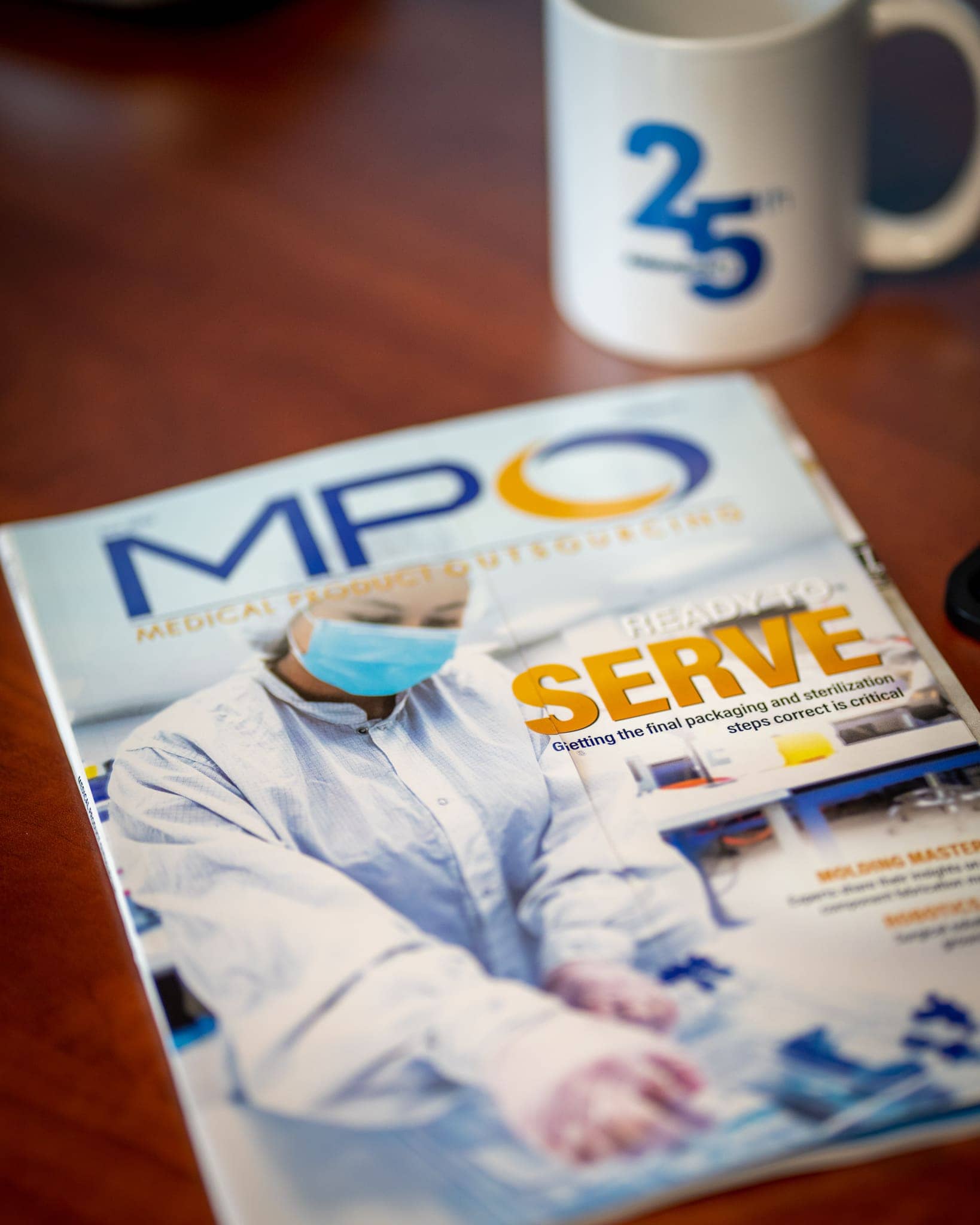
The regulated finish line for medical devices
Assembly, packaging, validation, and sterilization — consolidated under one FDA-registered, ISO 13485 certified quality system. 25+ years. 12 cleanrooms. 125,000+ sq ft across California, New Hampshire, and Costa Rica.
FDA-Registered
Manufacturing Facility
ISO 13485
Certified Quality System
12 Cleanrooms
Class 5–8
125,000+ Sq Ft
Regulated Manufacturing
3 Facilities
CA | NH | Costa Rica
ISO 17025
Accredited Packaging Lab
Choose Your Path
Different companies, different needs. Start with the path that matches where you are.
Launching Your First Device?
Startups
Access cleanroom infrastructure, quality systems, and regulatory guidance without building your own. 820+ startups launched.
See the Startup PathScaling or Consolidating Vendors?
OEMs
Reduce handoffs, audit exposure, and supplier risk with a single FDA-registered partner across assembly, packaging, and sterilization.
See the OEM PathScaling Diagnostics Consumables?
Diagnostics
Precision reagent packaging, cartridge assembly, and controlled-environment manufacturing for IVD and POC devices.
See the Diagnostics PathConsolidated Solutions Under One Roof
Assembly, packaging, validation, and sterilization — without the vendor handoffs.
Assembly & Kitting
Cleanroom assembly, kitting, and packaging under one quality system.
Request a QuotePackaging Validation
ISO 11607-compliant packaging development, testing, and validation.
Get a Validation PlanSterilization & Validation
EO, gamma, and e-beam sterilization with full validation support.
Book a ConsultCleaning & Decontamination
Loaner kit processing, surgical instrument cleaning, and reprocessing.
Get an AssessmentDiagnostics Manufacturing
Reagent packaging, cartridge assembly, and IVD consumable production.
Request an AssessmentOne Partner Replaces Five Vendors
Every vendor handoff is a chance for delays, quality gaps, and finger-pointing. LSO consolidates the entire regulated finish line under one quality system, one point of contact, and one predictable timeline.
Typical Multi-Vendor Path
The LSO Path
50%
Fewer vendor audits
30%
Faster time to market
1
Quality system to validate
Built on 25 Years of Regulated Manufacturing
When your device reaches LSO, it enters a system built over two decades of FDA oversight, ISO audits, and thousands of product launches.
25+
Years FDA-Registered
820+
Product Launches Supported
$4B+
Client Acquisition Value Created
12
Cleanrooms, Class 5–8
What Consolidation Looks Like in Practice
Consolidated assembly, packaging validation, and EO sterilization for a Class II sterile orthopedic device — reducing their vendor count from four to one and cutting 14 weeks from their launch timeline.
Orthopedic OEM, Class II Sterile Device
Supported a first-time device startup from prototype packaging through FDA submission — providing cleanroom assembly, ISO 11607 validation, and sterilization under a single quality system.
Medical Device Startup, Class II
Certifications & Standards
Ready to simplify your supply chain?
One partner for assembly, packaging, validation, and sterilization. Tell us about your device and we'll outline a path forward within one business day.