
ISO 11607: Packaging Validation (Parts 1 & 2) | LSO
ISO 11607 explained—Part 1 (materials & sterile barrier systems) and Part 2 (process validation). Tests, IQ/OQ/PQ, integrity, distribution, and aging—plus audit-ready documentation
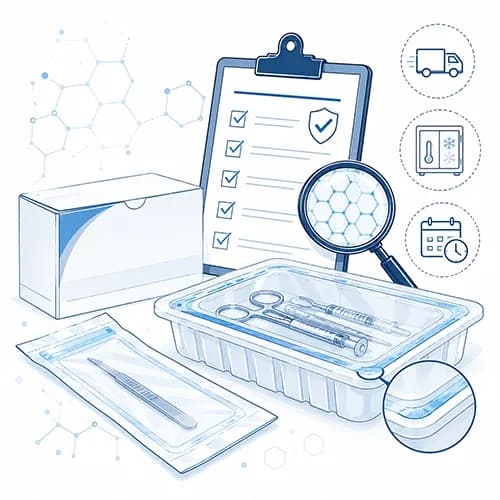
Packaging Process Validation for Terminally Sterilized Medical Devices
Last updated: November 2025 (ISO 11607-1/-2 current through Amd 1:2023)
Updated for 2025. ISO 11607 defines how your sterile barrier system is designed, sealed, tested, and proven—from first article through shelf life. This guide explains Part 1 (materials & sterile barrier systems) and Part 2 (process validation) in plain English, shares what auditors emphasize now, and shows a fast, low-surprise path to audit-ready documentation.
Video Overview: ISO 11607 Packaging Validation
Watch a 90-second walkthrough of ISO 11607—how Part 1 defines materials and sterile barrier system performance and how Part 2 proves your forming, sealing, and assembly through IQ/OQ/PQ, distribution, integrity, peel, and aging—so your package opens aseptically at the point of use.
ISO 11607 is the global standard for sterile medical device packaging. Its goal is simple: make sure the sterile barrier system protects the device all the way to the point of use—and opens aseptically when it matters most.
Part 1 defines what “good” looks like for materials and sterile barrier systems: strength, integrity, microbial barrier, stability over shelf life, and clean, aseptic presentation. It’s the specification side—what performance you must achieve and document.
Part 2 proves you can make that performance happen consistently. That means validating your forming, sealing, and assembly with IQ, OQ, and PQ; then confirming the package will survive real-world hazards—distribution and handling—followed by integrity checks like dye penetration or bubble leak, functional tests like peel, and aging to support shelf life.
Together, Parts 1 and 2 create a complete, auditor-friendly story: define the requirements, validate the process, and show objective evidence that every lot meets them.
At Life Science Outsourcing, we streamline ISO 11607 from plan to final report—test method selection, execution, data integrity, and gap-free documentation—so your team stays on schedule and audit-ready.
Need help mapping your path?
Start with a quick quote, or talk to an LSO packaging specialist about your ISO 11607 plan.
Overview
What ISO 11607 covers—and who it applies to.
Definition: ISO 11607 is the international standard for packaging of terminally sterilized medical devices. Part 1 defines material and sterile barrier system performance; Part 2 requires process validation—forming, sealing, and assembly—to produce that performance consistently.
ISO 11607 exists to maintain sterility to the point of use and enable aseptic presentation. Part 1 defines compliant materials and sterile barrier systems—the attributes and performance you must achieve. Part 2 defines how you develop and validate the processes that create them—forming, sealing, and assembly—so you can demonstrate repeatable outcomes in production. The same story applies whether you package in-house or partner with a contract packager.
Part 1 vs. Part 2
A plain-English guide for packaging teams.
Think of Part 1 as the definition of “what good looks like” for your sterile barrier system: strength, integrity, microbial barrier, stability over shelf life, and aseptic presentation after sterilization. Part 2 is the proof that you can make that system consistently: a defensible process window for forming, sealing, and assembly; IQ/OQ/PQ to establish capability; routine checks that operators actually use; and clear re-qualification triggers when something changes.
Great packaging validation reads like a map. A spec on the batch record should point straight back to the OQ/PQ—and to the risk logic that keeps patients safe.
Matthew Emrick, Medical Package Testing (LSO)
Note: ISO 11607-2:2019 remains current (confirmed 2024). ISO 11607-1 includes Amendment 1:2023. This page reflects those updates.
Your steps, condensed:
- Families & worst-case defined in plain English (Annex terms).
- Process windows for forming, sealing, assembly.
- IQ/OQ/PQ with acceptance criteria tied to risk & aseptic presentation.
- Routine checks that operators use—and that reference the validation.
- Re-qualification triggers (time/change/drift) and ownership.
“Most rework isn’t testing—it’s templates. When batch records and change control speak the same language as the validation, audits accelerate.”
Alan Evans, Medical Package Testing (LSO)
- Family logic not on paper. Remedy: a short Family & Worst-Case memo using the standard’s language, tied to PQ runs.
- Seal window proven, not governed. Remedy: translate OQ/PQ into operator-facing checks with acceptance limits that cite the source.
- Aseptic presentation assumed. Remedy: demonstrate method for atypical geometry/weight and capture it in the record.
- Re-qualification triggers tribal. Remedy: a one-page decision tree in change control.
FDA-Registered
Manufacturing Facility
ISO 13485
Certified Quality System
12 Cleanrooms
Class 5–8
125,000+ Sq Ft
Regulated Manufacturing
3 Facilities
CA | NH | Costa Rica
ISO 17025
Accredited Packaging Lab
What Changed Recently
Why the 2019 revisions and 2023 amendment matter now.
The 2019 updates modernized terminology and tightened expectations around process validation—especially sealing—so the language lines up with contemporary QMS practice. Amendment 1:2023 to Part 1 clarifies points many EU adoptions reference. If you still cite older text, build a one-page clause crosswalk to the current structure and refresh templates so the numbers on your records match the numbers in your validation.
Start with the story; then lock the steps and evidence.
We start where auditors start: traceability. Define your device/packaging attributes, group into families, and choose a defendable worst-case article. Develop forming/sealing/assembly processes with measurable windows, then show capability with IQ/OQ/PQ. Lock routine controls that cite the validation (sealer settings, samples, acceptance limits), and document re-qualification triggers in change control.
Real issues we see—and how to close them fast.
The four most frequent gaps we see: family logic not on paper (close with a short Family & Worst-Case memo using the standard's language, tied to PQ runs); seal window proven but not governed (close by translating OQ/PQ into operator-facing checks with acceptance limits that cite the source); aseptic presentation assumed (close by demonstrating method for atypical geometry or weight and capturing it in the record); and re-qualification triggers handled as tribal knowledge (close with a one-page decision tree in change control).
ISO 11607 FAQs
What is the difference between ISO 11607 Part 1 and Part 2?
Part 1 defines the requirements for materials and sterile barrier systems—strength, integrity, microbial barrier, stability, and performance. Part 2 addresses process validation—how you form, seal, and assemble packages to consistently meet Part 1. In short: Part 1 = what “good” looks like; Part 2 = proof your process makes “good” every time.
Who needs to comply with ISO 11607?
Any medical device manufacturer or contract packager that supplies terminally sterilized devices must comply with ISO 11607. It applies whether packaging is done in-house or by a contract manufacturer, and across sterilization methods (e.g., steam, EtO, irradiation), as long as the finished device is provided sterile at point of use.
What packaging tests are suggested under ISO 11607?
Typical test programs include seal strength, dye penetration or bubble leak (integrity), peel and tensile, plus aging and distribution simulation (e.g., ASTM D4169/ISTA). The exact plan is risk-based and tailored to device, materials, and sterilization. Results must demonstrate the sterile barrier system maintains integrity through shipping, storage, and shelf life.
What is process validation for packaging in ISO 11607 Part 2?
Part 2 requires documented IQ/OQ/PQ of packaging processes (e.g., sealing). IQ verifies equipment setup and calibration; OQ challenges critical parameters to define a proven acceptable range; PQ shows repeatable performance at nominal settings with routine operators and materials. Ongoing controls (e.g., UCL/LCL checks, seal audits) ensure the process stays capable.
When do I have to re-validate my packaging process?
Re-validation is triggered by change: new materials, seal tooling, equipment, software, sterilization cycle, labeling/IFU that alter conditions of use, or critical parameter drift and nonconformances. Also re-validate after extended downtime, site transfer, or on a scheduled frequency per your risk management and trend data.
Does ISO 11607 cover all sterilization methods, including steam?
Yes. ISO 11607 is method-agnostic. Whether you sterilize by steam, EtO, irradiation, or low-temperature systems, you must prove your sterile barrier system and packaging process maintain sterility to the point of use. Your test plan and validations should reflect the specific method and bioburden/conditioning it imposes.
What documentation is expected for ISO 11607 compliance?
You’ll need a packaging validation file: risk analysis, design inputs/outputs, material specs/COAs, test plans and reports, aging & distribution summaries, equipment IQ/OQ/PQ, work instructions, in-process controls, acceptance criteria, and change control records. Auditors look for a traceable story from requirements → evidence → maintained control.
One-page PDF map for auditors (Parts 1 & 2).
Talk to a Packaging Specialist
Free 15-minute consult with a packaging specialist.
Ready to get started?