
Package Validation Testing: Ensuring Device Safety
Understand how package validation testing guarantees the safety and effectiveness of medical device packaging as per ISO standards.
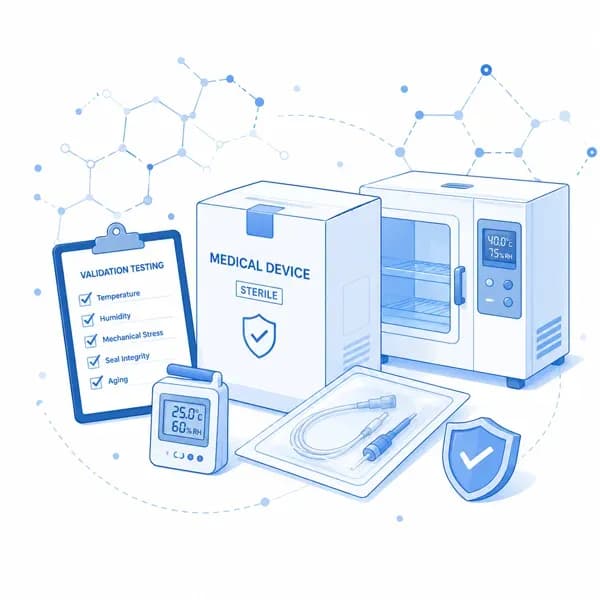
Life Science Outsourcing is committed to providing thorough medical device package validation testing that ensures compliance and effective, reliable packaging for our clients. As part of our end-to-end solutions, we provide expert testing to prevent failures, recalls, and delays — keeping your packaging compliant with regulatory standards, sterile, and ready for real-world conditions.
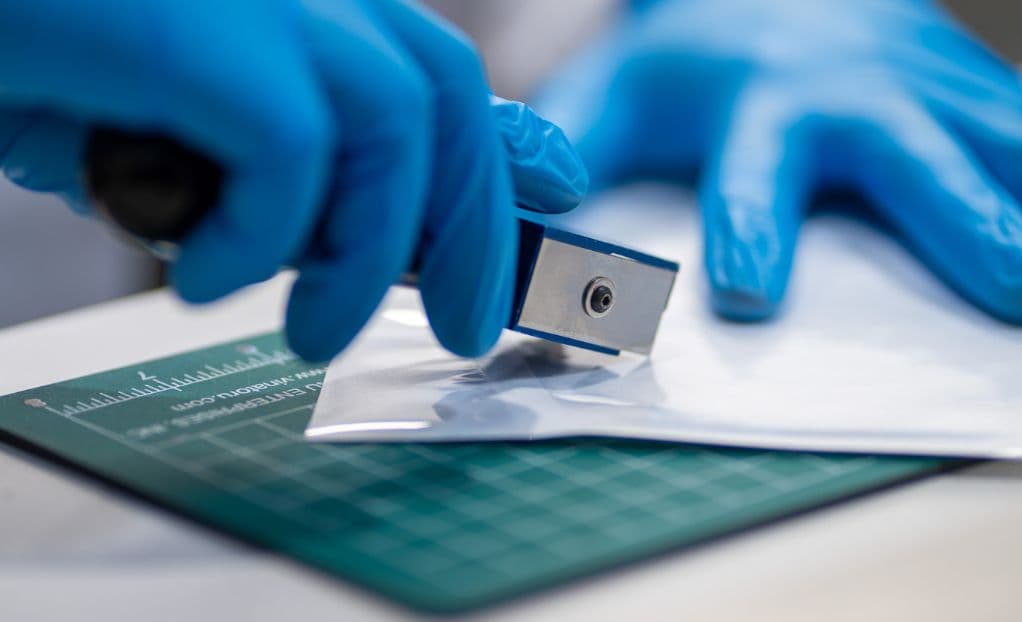
Package Validation Testing for Compliance and Product Integrity
Ensure your medical device packaging meets regulatory standards, maintains sterility, and withstands real-world conditions. As part of our end-to-end solutions, we provide expert testing to prevent failures, recalls, and delays.
What is medical device package validation testing?
Medical device package validation testing uses a series of tests to validate that the packaging of a medical device will meet regulatory requirements and is able to protect the device from hazards during distribution, storage, and use. Package validation testing typically involves:
Integrity testing
Integrity testing verifies that the packaging will maintain sterility and prevent microbial contamination.
Physical strength testing
This type of testing is conducted to assess packaging material durability along with seal and closure strengths.
Performance testing
Performance testing evaluates how well packaging performs under conditions such as temperature, humidity, and mechanical stress.
Package validation testing services ensure compliance with the ISO 11607 standard, which states that manufacturers must verify that the product and package system conjoin to create a complete product that performs efficiently, safely, and effectively in the hands of the user.
Who needs medical device package validation testing?
Medical device manufacturers, contract packaging companies, and regulatory bodies all use package validation testing to ensure patient safety, meet regulatory compliance requirements, verify product integrity, and bolster brand reputation.
FDA-Registered
Manufacturing Facility
ISO 13485
Certified Quality System
12 Cleanrooms
Class 5–8
125,000+ Sq Ft
Regulated Manufacturing
3 Facilities
CA | NH | Costa Rica
ISO 17025
Accredited Packaging Lab
How does medical device package validation testing work?
A series of systematic tests and evaluations are performed to verify the packaging will effectively protect the device throughout its lifecycle.
Test plan development
A comprehensive development plan will include objectives, standards and guidelines, test methods, and acceptance criteria.
Package design evaluation
This evaluation includes material selection and seal integrity.
Performance testing
Performance testing includes multiple elements, such as accelerated aging testing, real-time aging testing, and distribution simulation testing.
Environmental conditioning
The packaging is exposed to various environmental conditions to assess durability and package integrity and can include temperature and humidity testing and altitude testing.
Physical testing
These tests can include tensile strength testing, burst testing, and puncture resistance testing.
Documentation and reporting
Test reports and compliance documentation are compiled to detail procedures, results, and conclusion of tests along with compliance to all regulatory standards.
Review and approval
A quality assurance review is conducted to affirm that all criteria have been met, and documentation is submitted to regulatory bodies.
Package validation testing requirements
Package validation testing is vital to ensure the integrity of a package’s seal. Validation provides assurance and security that a package is sealed properly, leak-free, and protected from outside contaminants. Accelerated aging should take place after the integrity of the product and package has been determined.
The main culprit for feeble package strength is the sealing parameters. If a formal validation of the sealer is not carried out, the medical device manufacturer can expect failure. Packages may also lose their integrity during processing and/or distribution. Package validation testing may be used to validate that the package integrity has been maintained throughout the package’s processing, expected shelf life, and handling.
Testing includes, but is not limited to:
- ASTM F1886 — Visual Inspection Test
- ASTM F88 — Peel Strength Test
- ASTM F1140 — Burst Test
- ASTM F1929 — Dye Penetration Test
- ASTM F1140 — Creep Test
- ASTM F2096 — Bubble Emission Test
What standards apply?
Life Science Outsourcing follows ISO 11607 comprehensive guidance on packaging for terminally sterilized medical devices, which includes design, testing, and validation testing requirements.
Why LSO?
As an FDA-registered and ISO 13485-certified contract manufacturing organization, Life Science Outsourcing (LSO) offers assembly, packaging, sterilization, and specialized capabilities in diagnostics packaging and design. Our unique business model combines comprehensive in-house services and extensive regulatory expertise, allowing us to provide the agility and flexibility needed to expedite market launches while standardizing the supply chain and minimizing risks.
Ready to get started?
Talk to a specialist about package validation testing: ensuring device safety.