
Selecting the correct Distribution Cycle (DC) can be one of the most difficult steps in a successful ASTM D4169 package validation. While the standard provides a clear framework for simulating real-world distribution hazards, many medical device manufacturers misapply DCs—often defaulting to the most common option without assessing the actual shipping, handling, and storage conditions of their product. The result is unnecessary failures, rework, extended timelines, and possible recalls.
Getting the DC right from the start is not just a technical detail. It is foundational for regulatory compliance, cost control, and ultimately, patient safety.
Why DC Selection Matters
ASTM D4169 uses DCs to model the stresses a package may encounter throughout its distribution journey. Each DC defines expected hazards such as:
- Mechanical shock
- Fixed vibration for repetative shock
- Compression
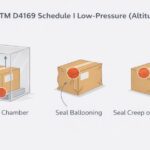
- Low pressure (for air transport or high altitudes)
- Environmental conditioning
- Handling drops
- Vehicle-specific vibration profiles
Choosing a DC that does not reflect your product’s real distribution environment creates two risks:
- Under-testing: A DC that is too lenient may pass packaging that would fail in actual transit.
- Over-testing: A DC that is unnecessarily severe increases the risk of failures that do not represent reality, leading to costly redesigns and delays.
Your goal—and ours—is accuracy, not aggressiveness.
Overview of ASTM D4169 Distribution Cycles (DC 1–18)
Below is a simplified guide to the DCs most relevant to medical devices. ASTM D4169 groups DCs into categories based on transportation mode, handling intensity, and distribution complexity.
DC 1–4: Motor Freight (Truck Transport)
These cycles simulate typical commercial truck shipments.
- DC 1: This is a general cycle that includes possible multi-modal shipping and rail transportation.
- DC 2: This is user defined for when the shipping channel is well-defined and shipping hazards are understood. Often times, this DC is useful for private courier transportation as opposed to major courier transportation (such as UPS or FedEx).
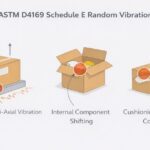
- DC 3: This is for a single package, less than a truckload, and not fixed to a pallet or skid. DC 3 is similar to DC 13 as they both consider motor freight transportation. DC 3 offers the option of stacked vibration (schedule D) which is often more intense than compression (schedule C) and random vibration (schedule E) tested separately.
- DC 4: This is for a single package, less than a truckload, that is fixed to a pallet or a skid. This is often used for larger packages or palletized units that can be stacked. This is different than DC 6 which is for a less than truckload, unitized freight that is fixed to a pallet or skid.
Most medical devices travel through LTL networks (from warehouse to end user)—making DC 2 one of the most commonly used cycles. However, that default is not always correct since the shipping channel needs to be well-understood.
DC 5–6: Full Truckload Transport
These DCs are when entire shipments include a truck load full of the same product or similar shipping containers. DC 5 works for non-palletized shipments where DC 6 includes shipments fixed on pallets or skids.
DC 7–11: Rail Transport
These represent the vibration and impact environment of rail shipments.
Microsurgical equipment, imaging components, or large diagnostic instruments that ship via multi-modal freight may require these cycles.
DC 12–13: Motor Frieght and Air Transport
These cycles simulate both ground-based and air-based transportation, which may also include low pressure testing for high altitudes. Only porous materials need to be exposed to low pressures unless the medical device is pressure sensitive. DC 12 is for heavy parcels or unitized loads that need motor and air modalities. DC 13 is for lighter, individual packages that need to experience both motor and air hazards.
DC 13 is probably the most common DC selected for medical devices. It takes into consideration the common shipping pathways from manufacturer to warehouse or warehouse to end-user. All of these specifics matter when choosing the right DC.
DC 14–18: Specialty Scenarios
Used for uncommon or high-risk shipment types such as:
- Maritime cargo
- Hazardous materials
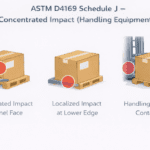
- Warehouse hazards like forklift movement and palletized stacking
Few medical device shipments require these, but they matter when they do.
How to Determine the Right DC for Your Device
The correct DC is not chosen by intuition or tradition—it’s derived from a structured assessment.
1. Map the Actual Shipping Pathway
Consider:
- Where is the device manufactured?
- Where is it sterilized?
- Where is it kitted or finished?
- What carriers and modes are used (truck, air, ship, multi-modal)?
- Is distribution domestic, international, or mixed?
A surprising number of device manufacturers discover they are testing for scenarios they never encounter—or missing ones they do. This is why it is important to map out the actual shipping pathway before testing.
2. Understand the Handling Environment
LTL shipments involve significant manual handling and sorting.
Parcel networks (UPS/FedEx) impose frequent automated sorting with aggressive impacts.
Air shipments may subject packages to low pressure for extended periods.
These differences determine which vibration and shock profiles are appropriate.
3. Evaluate Product Sensitivity and Packaging Configuration
A lightweight, flexible pouch requires different considerations than a rigid tray or multi-unit carton.
The DC must take into account:
- Product fragility
- Packaging rigidity
- Stack height
- Sterile barrier material behavior
- Potential for puncture or abrasion
4. Align with Regulatory Expectations
FDA does not prescribe a specific DC, but reviewers expect a defensible rationale.
An incorrect DC—especially one that underestimates hazards—can trigger requests for additional justification or retesting.
A clearly documented selection process is essential.
What Can Go Wrong When DC Is Misapplied
At LSO, we routinely help customers recover from packaging failures rooted in incorrect DC selection. Common issues include:
- Seal failures after vibration exposure unrepresentative of the true shipping mode
- Tray cracking due to over-aggressive compression conditioning or heavy medical device systems
- Sterile barrier breaches under low pressure not included in testing for non-porous packaging
- Distribution cycles incompatible with actual sterilization load configurations
These problems are preventable. The cost of retesting isn’t just dollars—it’s time-to-market or embarrassing recalls.
How LSO Helps You Choose the Right DC
Our packaging specialists don’t treat ASTM D4169 as a one-size-fits-all standard. We work directly with your team to:
- Analyze your real-world distribution environment
- Map shipping modes, transfers, and carriers
- Identify the correct DC based on actual hazards, not assumptions
- Document your rationale for regulatory submission
- Integrate DC selection with aging and sterile barrier testing
Because LSO provides full-package validation in-house—from ASTM D4169 to accelerated aging, peel, dye penetration, and beyond—we ensure your testing strategy is cohesive rather than fragmented.
The result is fewer surprises, fewer failures, and a smoother path to market.
Final Thoughts
Selecting the right Distribution Cycle isn’t optional—it’s foundational. When the DC truly reflects your product’s real distribution exposures, your risk of failure drops, your validation timeline tightens, and your regulatory narrative becomes more defensible.
If you’re planning a new packaging validation or revisiting an existing system, we can help you determine the most accurate, efficient test plan from the start.
Talk to a Specialist at LSO to ensure your next ASTM D4169 test is built on the right foundation.
Takes about 60 seconds.
Typical response within 1 business day.
15-minute consult with a packaging specialist.