
Dye Penetration Testing
Takes about 90 seconds.
Typical response within 1 business day.
15-minute consult with a packaging specialist.
Dye Penetration Testing for Medical Device Packaging
Dye penetration testing is a qualitative seal integrity test used to detect leaks in sterile medical device packaging. It is commonly performed as part of ISO 11607 packaging validation, aging studies, and distribution simulation testing.
For medical devices, dye penetration testing is conducted using ASTM F1929 for porous materials and ASTM F3039 for non-porous materials. These methods allow manufacturers to visually identify defects that could compromise the sterile barrier system.
At Life Science Outsourcing (LSO), dye penetration testing is performed in controlled laboratory environments by trained specialists as part of an integrated medical device packaging validation workflow.
Video Overview: Dye Penetration Testing
What Is Dye Penetration Testing?
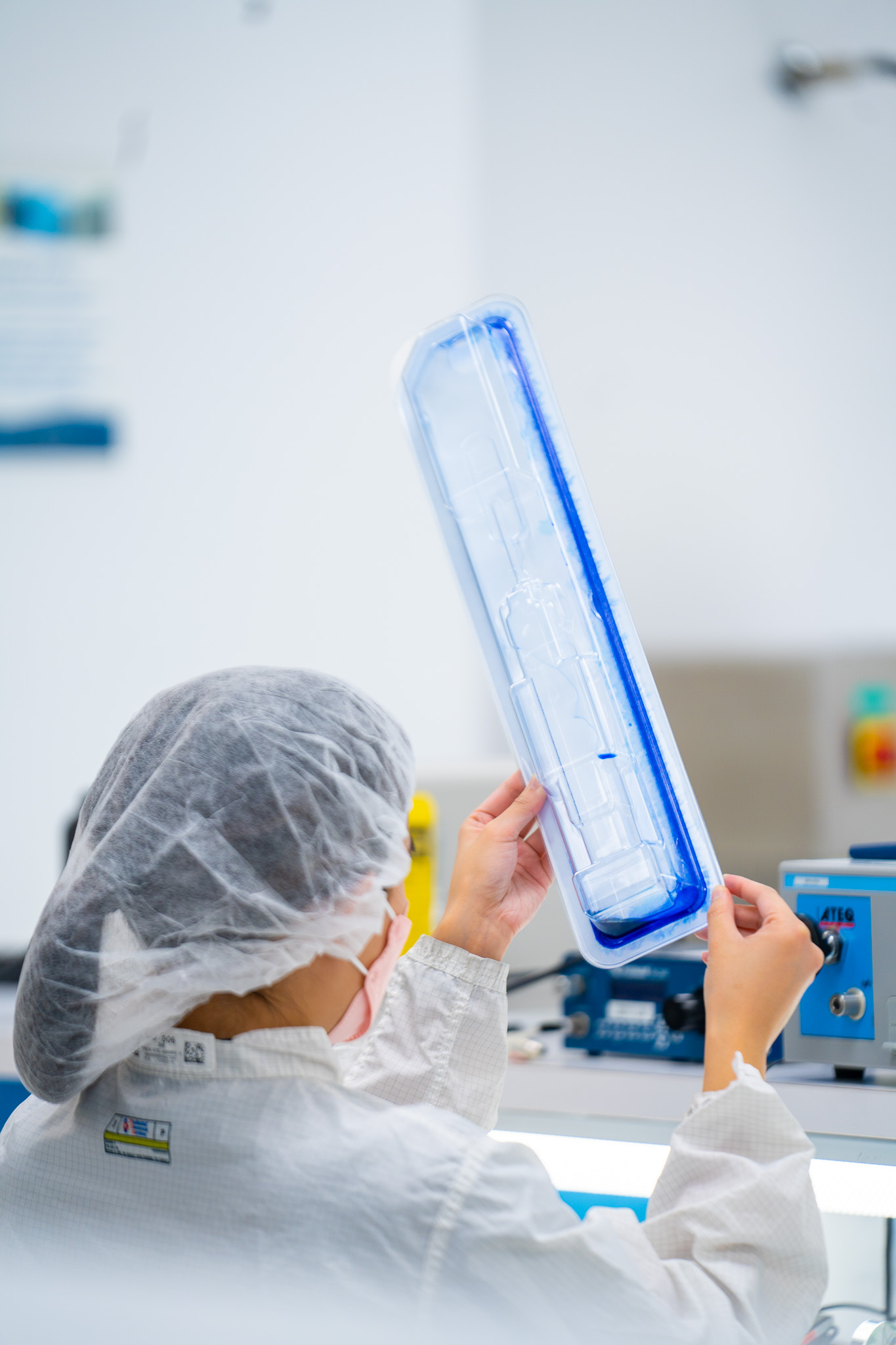
Dye penetration testing is a destructive, visual leak detection method. A colored dye solution is introduced to the package, and the package is inspected for dye migration through the seal or packaging material.
The test is designed to identify:
- Channel leaks
- Incomplete seals
- Gross seal defects
- Material breaches (non-porous systems)
Dye penetration testing does not measure leak rate, seal strength, or package pressure resistance. It confirms the presence or absence of a leak path.
FAQ — Is dye penetration testing destructive?
Yes. Once dye is introduced, the package cannot be returned to service or reused.
Medical Device Dye Penetration Testing vs Industrial Dye Penetrant Inspection
Medical device dye penetration testing should not be confused with industrial dye penetrant inspection used for welds, metals, and structural components.
| Medical Device Packaging | Industrial NDT |
|---|---|
| ASTM F1929 / ASTM F3039 | ASTM E165 / ASTM E1417 |
| Seal & package integrity | Surface crack detection |
| ISO 11607 validation | Structural defect analysis |
| Sterile barrier focus | Metal & composite materials |
LSO performs medical device packaging dye penetration testing only, in accordance with ISO 11607 and ASTM packaging standards.
Applicable Standards for Dye Penetration Testing
ASTM F1929 — Dye Penetration for Porous Materials
ASTM F1929 is used for packaging systems that include porous materials, such as Tyvek®.
- Detects channel leaks
- Dye migrates through porous pathways
- Commonly used for pouch and tray seals with porous components
- Qualitative (pass/fail)
ASTM F3039 — Dye Penetration for Non-Porous Materials
ASTM F3039 is used for non-porous packaging systems.
- Detects gross seal leaks and material defects
- Dye migrates through seal failures or surface breaches
- Not suitable for porous materials
- Qualitative (pass/fail)
Selecting the correct test method is critical. Using ASTM F1929 on non-porous materials — or ASTM F3039 on porous materials — can invalidate results.
Dye Penetration Test Selector
When Dye Penetration Testing Is Used
Dye penetration testing is commonly performed during:
- Heat seal qualification
- Baseline testing before environmental stressors are applied
- Early R&D phase
- Initial package validation
- Packaging design verification
- Accelerated aging studies
- Real-time aging studies
- Distribution simulation testing (ASTM D4169)
- ISO 11607 compliance activities
It is frequently combined with other package integrity tests to provide a more complete assessment of sterile barrier performance.
FAQ — Can dye penetration replace bubble leak testing?
No. Dye penetration identifies visible seal leaks, while bubble leak testing (ASTM F2096) detects gross package leaks using pressure differentials.
Dye Penetration Testing vs Other Package Integrity Tests
| Test Method | Detects | Quantitative | Material Compatibility | Typical Use |
|---|---|---|---|---|
| ASTM F1929 | Seal leaks | No | Porous only | Channel leak detection |
| ASTM F3039 | Seal & surface leaks | No | Non-porous only | Seal or package defect detection |
| ASTM F2096 | Gross leaks | No | Porous & non-porous | Whole-package integrity |
| ASTM F1886 | Visual defects | No | Only packaging systems with one transparent material | Seal and surface inspection |
| ASTM F88 | Seal strength | Yes | All materials | Mechanical seal validation |
Limitations of Dye Penetration Testing
While dye penetration testing is widely accepted, it has important limitations:
- Subjective visual interpretation
- No quantitative leak measurement
- Destructive test method
For this reason, dye penetration testing is best used as part of a broader test strategy, rather than as a standalone method.
Dye Penetration Testing at Life Science Outsourcing (LSO)
LSO performs dye penetration testing as part of fully integrated medical device packaging validation programs.
Testing is conducted:
- By experienced packaging specialists
- Using validated ASTM methods
- In controlled laboratory environments
- With documented procedures and reporting
Dye penetration testing at LSO is commonly paired with:
- Bubble leak testing (ASTM F2096)
- Seal strength testing (ASTM F88)
- Visual inspection (ASTM F1886)
- Accelerated and real-time aging
- Real-time aging
- Distribution simulation testing
Dye penetration testing is a valuable tool for identifying defects, but it must be applied correctly and interpreted in the context of the overall packaging system. Selecting the right method and combining it with complementary tests is key to a defensible packaging validation.”
Matthew Emrick, Packaging & Validation Specialist, Life Science Outsourcing
Dye Penetration Testing FAQ
Is dye penetration testing required by ISO 11607?
No. ISO 11607 does not mandate a specific test, but dye penetration is an accepted method for seal integrity verification.
Which dye penetration standard should I use?
ASTM F1929 for porous materials; ASTM F3039 for non-porous materials.
Does dye penetration detect microleaks?
No. It detects visible dye migration, not microleak rates.
Can dye penetration damage packaging?
Yes. The test is destructive by design.
Can dye penetration be used after aging studies?
Yes. It is commonly performed after accelerated or real-time aging to assess seal integrity over time.
Talk to a Packaging Specialist
Plan your dye penetration testing and sterile barrier validation with Life Science Outsourcing.
Our specialists can help you select the appropriate test methods and build a compliant ISO 11607 testing strategy.
Our Services
Takes about 90 seconds.
Typical response within 1 business day.
15-minute consult with a packaging specialist.